
Farmers & Producers
Why Farmers Matter in Farm to Kids
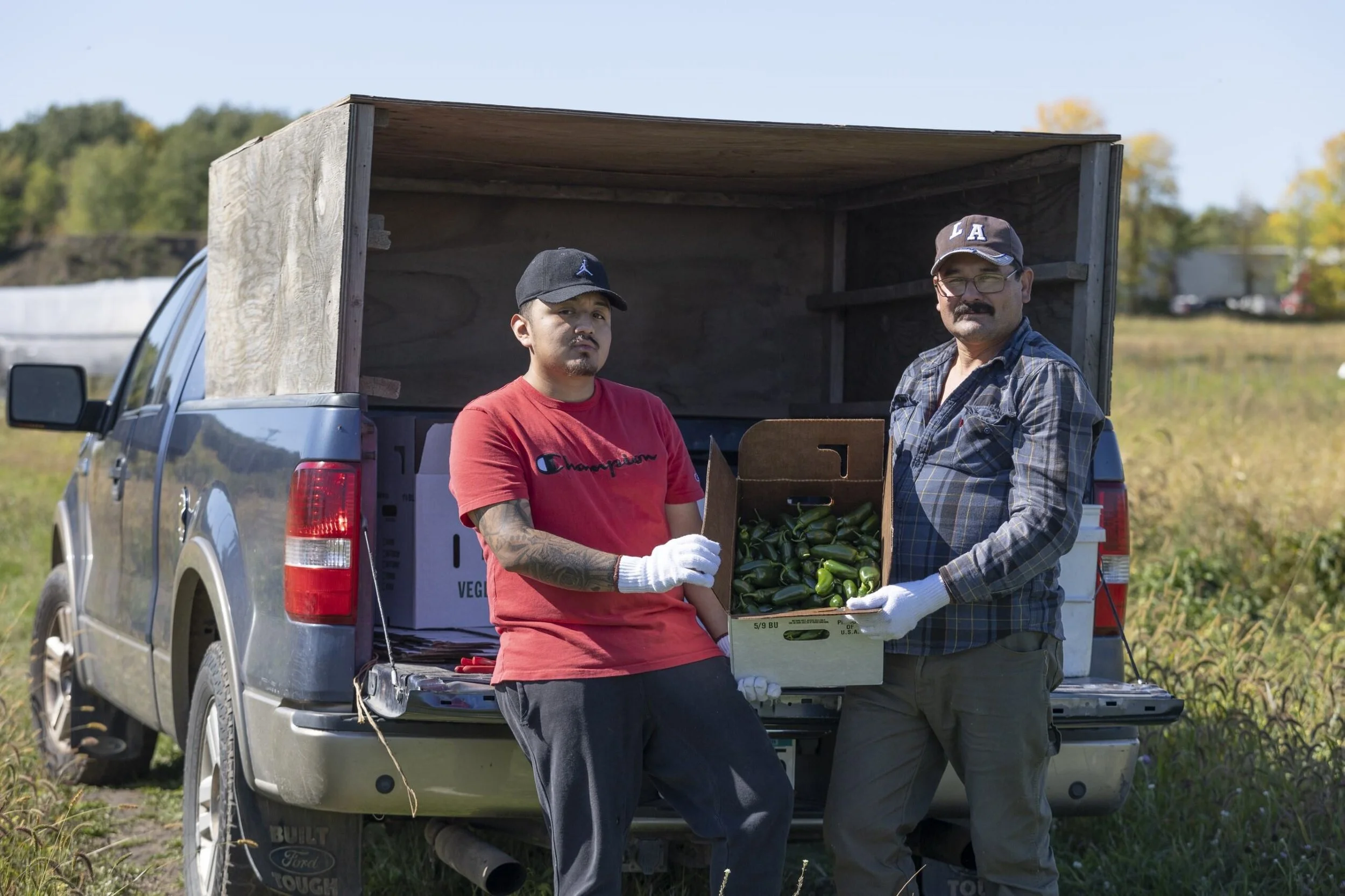
Farmers are an important part of Farm to Kids because they provide fresh, local food for school meals and help students connect to where their food comes from. By participating, farmers support healthy kids, strengthen local communities, and build steady markets for their products.
Resources for Farmers
Farm and Wholesale Planning
Extension web page to help local farmers make planning decisions, especially those who are new to wholesale.
Use the food safety tree to view allowable practices when purchasing local shell eggs, meat and poultry.
A comprehensive curriculum for produce farmers who are considering starting or expanding wholesale sales to schools, restaurants, grocery stores, distributors, food hubs, or other buyers.
Farm Food Safety
Extension web page to help local farmers grow and harvest safe produce.
The Minnesota Department of Education’s Food Safety Requirements for Farmers
Selling to Schools & Early Care Providers
Quick links for producers who want to sell to schools.
Quick links for Farmers looking to start Farm to Kids.
Overview of Farm to School opportunities, requirements, and support for producers.
Funding Resources
Farm to Kids Grant Program
Funding opportunities from the Minnesota Department of Agriculture, including grants and financial support for farmers, schools, early care programs, and food system projects.
Connect with Interested Buyers
Connects people with local farmers, food producers, and markets across the state. It is an easy way for families, schools, and communities to find fresh Minnesota-grown food while supporting local agriculture.
Information from the Minnesota Department of Agriculture to assist with grant and loan resources that connect farmers and food producers with schools and early care programs.
Farm to Kids Grantees
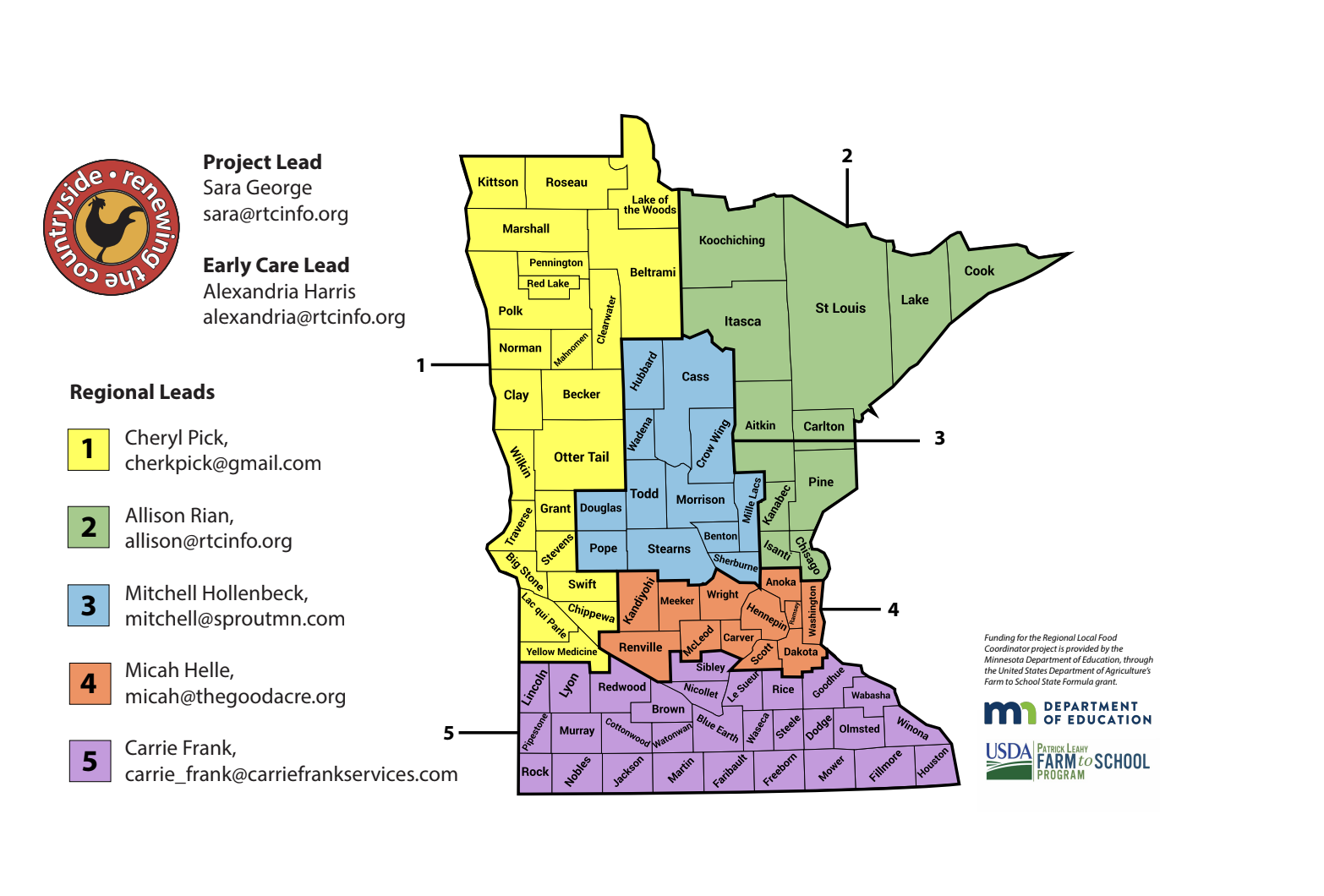
Renewing the Countryside Expands Farm to Kids Work
Looking for support to start or grow a Farm to Kids program at your school, early care site, farm, or community?
Regional Local Food Coordinators across Minnesota are here to help connect you with resources, answer questions, and provide guidance!
They support Farm to Kids efforts by building connections, sharing information, and helping communities create stronger local food partnerships.
Click here to learn more!